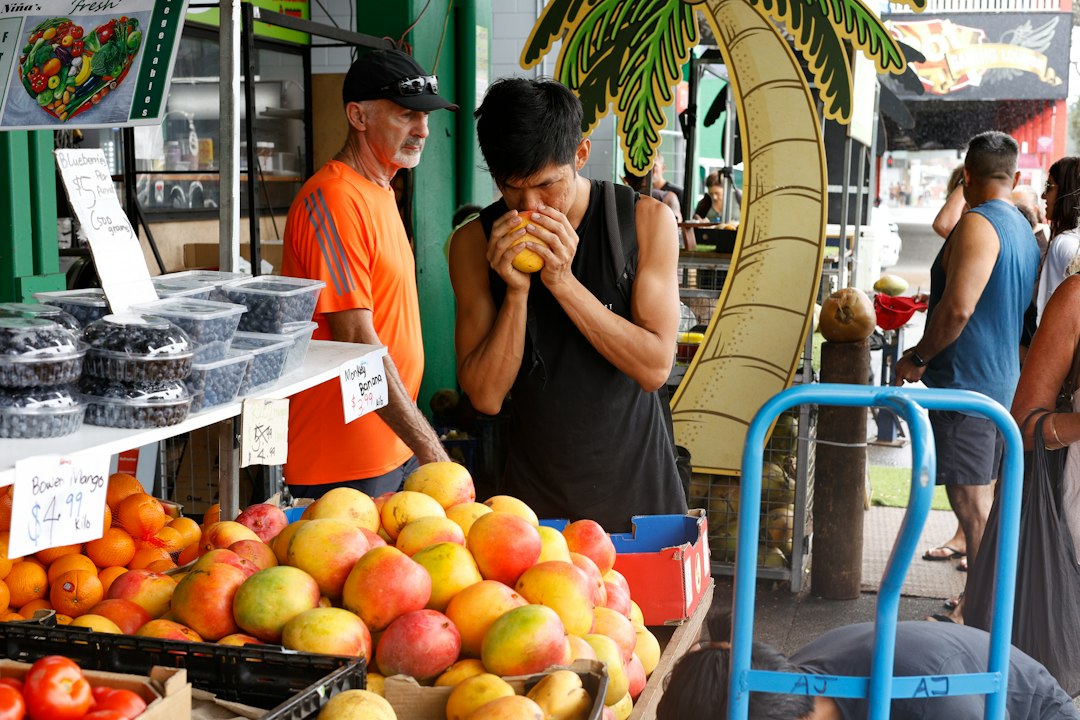
Picking a ripe mango at a Sydney market often turns into guesswork, and guesswork means a sour slice at home. Flemington and Paddy's sell several varieties side by side, each with its own ripeness signal, and colour alone tells a shopper very little. This guide works through the squeeze, the smell, the variety and the calendar, so a buyer walks away with fruit that is ready to eat, not just ready to photograph.
What makes a mango ripe, not just coloured
Shoppers often look for a bright orange or red skin and assume that means ripeness. That instinct fails with mangoes, because colour changes by variety rather than by stage of ripeness. Kensington Pride has a sweet and tangy taste with rich juicy flesh, and its skin runs yellow to orange tinged with a pink blush, but the real ripeness indicator is a strong aroma and a slight softness to the touch. A green-skinned R2E2 can be perfectly ready, while a deeply blushed Calypso can still be firm and underripe.
The safer approach treats colour as background information and touch and smell as the deciding factors. This matters most at a market stall, where several varieties sit in the same tray and a shopper has seconds to choose. Knowing which variety is in front of you changes what you should be checking for.
Match the ripeness test to the variety
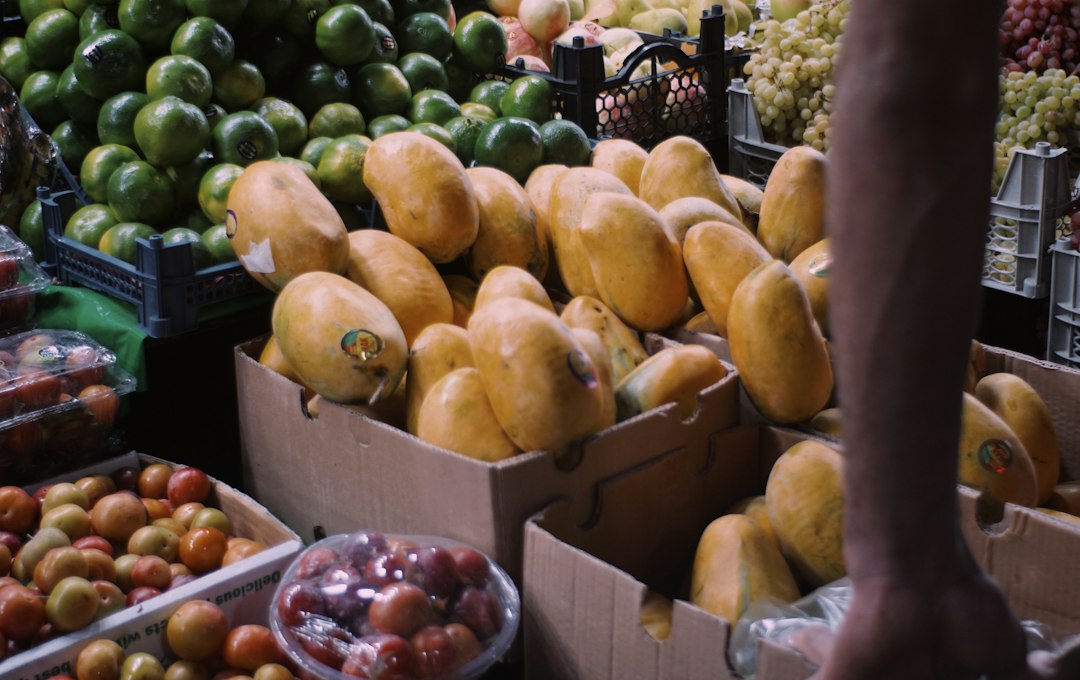
Australia grows a handful of commercial varieties, and each one signals readiness differently. The most common is Kensington Pride, also called Bowen, followed by Calypso, R2E2, Honey Gold, Keitt and some lesser-harvested types like Nam Doc Mai. The name R2E2 is not marketing: it takes its name from the row and position in the field of the original tree at the Department of Agriculture and Fisheries' Bowen Research Facility.
R2E2 mangoes have orange skin with a red blush, and the ripeness cue is a slight give when you apply gentle pressure, with an average weight of around 650 grams per fruit. That weight matters at the checkout, since a single R2E2 can cost as much as two smaller mangoes. Calypso, grown in the Northern Territory and Queensland, carries a small seed, a signature deep pink blush and extra large, plump cheeks with a sweet flavour.
Honey Gold is the youngest of the main varieties and often the sweetest. It is known for its sweet flavour and fibreless flesh, was first produced in Queensland's Rockhampton region in 1991 as a hybrid of Kensington Pride and an unknown variety, and the rights to it are owned by the Queensland-based Piñata Farms. Because it has almost no fibre, a Honey Gold that feels ripe to the touch rarely disappoints once cut.
The squeeze, sniff and stem check for a ripe mango
Once you know the variety, the physical test stays almost the same across types. Cup the mango gently in your palm and press near the stem end rather than the middle, where bruising shows first. A ripe mango gives slightly under light pressure, the way a ripe peach does, without feeling mushy or leaving a dent.
Smell confirms what touch suggests. A Sydney fruit specialist quoted by ABC Everyday describes a ripe mango as "slightly soft to the touch and should smell like a mango", with the aroma strongest right at the stem scar. If a mango has no smell at all, it usually needs another day or two on the counter. If it smells sweet but feels rock hard, it was likely picked too early and will ripen unevenly rather than sweeten properly.
Where Sydney shoppers find the best mangoes
Flemington is the obvious starting point, and it operates on a different schedule depending on the day. Fridays offer a laid-back fresh food and general goods session, Saturdays turn the site into Sydney's largest farmer's market, and Sundays shift toward general goods and food trucks. Public trading runs Friday from 10am to 4.30pm, Saturday from 6am to 2pm, and Sunday from 9am to 4.30pm.
Behind those public hours sits a separate wholesale layer that casual shoppers cannot access. The Sydney Produce Market and Sydney Growers Market have no public access Monday to Friday, and entry requires a valid ABN with a registered Buyers GTA Entry Pass. That restriction explains why the freshest, grower-direct mangoes often reach the public stalls only once the weekend trading window opens.
Flemington Markets is the largest wholesale fruit and vegetable market in the Southern Hemisphere, with produce available at wholesale prices to visiting shoppers. The site itself covers about 42 hectares and runs a 24-hour wholesale cycle alongside its separate produce, flower and growers markets. One long-time shopper reviewing Paddy's on Tripadvisor, who has bought there for decades, reported that prices at Flemington average about 70 per cent of retail prices found outside the markets.
Paddy's at Haymarket offers a city-centre alternative for anyone who cannot get to Flemington on a weekend. Sitting in the heart of Sydney's Chinatown, it is open Wednesday through Sunday across indoor and outdoor sections. It carries a narrower mango selection than Flemington but suits anyone grabbing fruit on a weekday lunch break.

Timing a visit to mango season
Mangoes do not arrive in Sydney all at once. The season starts around August or September in the Northern Territory and northern Western Australia, while North Queensland's crop begins around October or November. Rockhampton, Bundaberg, northern New South Wales and Carnarvon supply from around December or January, and Gingin in Western Australia begins supply around February.
For the Sydney shopper, that staggered calendar means variety availability shifts through summer rather than appearing all at once. Kensington Pride typically runs September to February, Calypso September to March, and R2E2 October to February. Peak supply across all varieties lands between November and February, when the warm summer months push multiple regions into harvest at once.
Kensington Pride dominates by volume even with other varieties on the same table. It starts the season and still makes up 43 per cent of the national crop. That explains why it is usually the cheapest and most widely stocked option at Flemington from spring through to early autumn, while Honey Gold and Keitt tend to sit at the higher end of the price range later in the season.
What to do first, what can wait
Buy for the day, not the week, until you have handled a few mangoes and learned the squeeze. Start at Flemington on a Saturday morning, when the farmer's market stalls carry the widest variety range and the freshest grower-direct stock. Identify the variety first, since that changes what colour and firmness actually mean, then apply the stem-end smell test before you commit to a tray.
What can wait is chasing a specific variety out of season. Kensington Pride in September will always beat an imported or hothouse mango in June, so there is little point hunting for perfection outside the September to March window. A mango that still feels hard at the stem will ripen on the kitchen counter within two or three days, so there is no need to press every piece of fruit in the tray before you leave the stall.