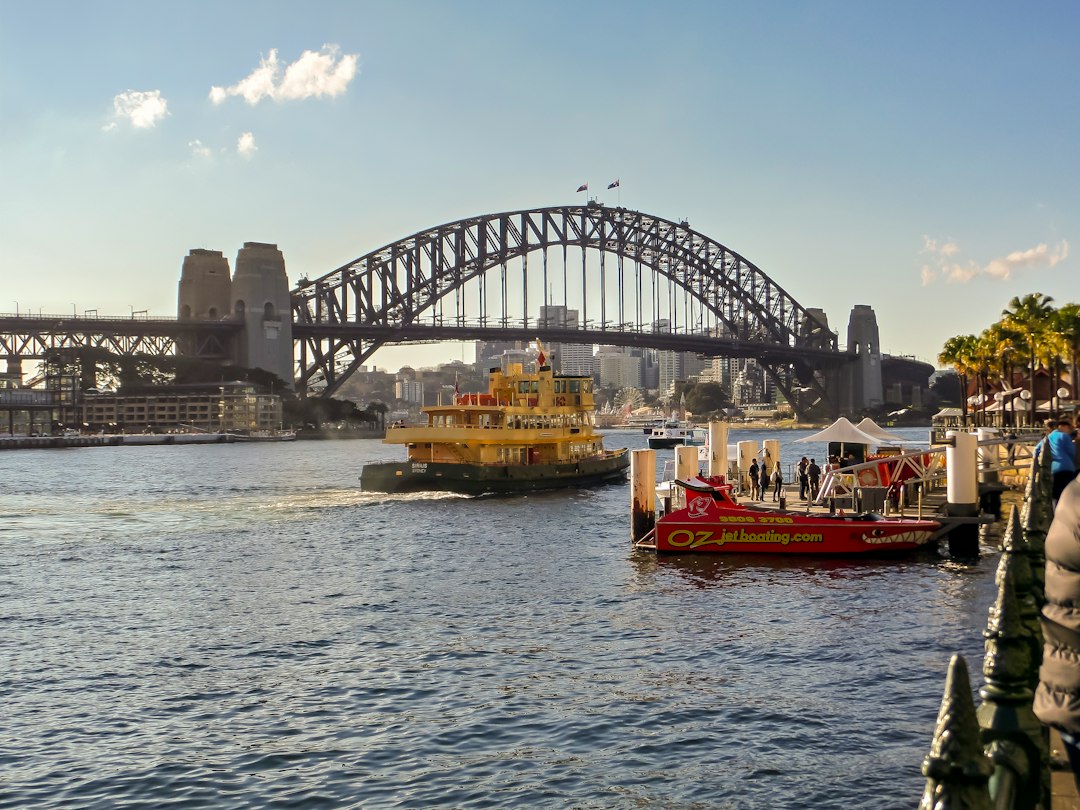
A ferry seat in January often means standing room on the aft deck, pressed against a tour group and someone's suitcase. Sydney's harbour network carries heavy summer demand, and Circular Quay's wharves can feel like one long queue if you do not know which line to join. This guide sets out which routes, wharves and departure times actually get you a seat with a view, based on how the public and private ferry services run during the warmer months.
Every option below meets the same test: it runs on a published timetable, it has a named wharf or route number you can check before leaving home, and it either avoids the busiest queue or times the ride to miss it. Routes that simply told readers to arrive early were left out, since that advice applies to almost any attraction in the city.
Split the Manly queue between two wharves
Circular Quay funnels ferry passengers through five wharves set at right angles to the shore, numbered 2 to 6, and in summer most of the crowd forms at just one of them. The Circular Quay ferry wharf complex consists of five double-sided wharves at 90 degrees to the shoreline, numbered 2 to 6. The F1 Manly Ferry runs from Wharf 3 at Circular Quay, taking about 30 minutes to reach Manly Wharf. The Manly Fast Ferry, a private service, runs from Circular Quay Wharf 2 to Manly Wharf 2 in about 20 minutes. Both charge the same Opal fare for the trip, same AU$9.20 Opal fare as the F1, so checking both departure boards before joining a line is worth the extra minute.
Catch the Taronga Zoo ferry before the gates open
The F2 Taronga Zoo ferry leaves Circular Quay every 30 minutes, reaching Taronga Zoo Wharf in 12 minutes, and the indicator screens on the quay show which wharf it uses. On arrival, passengers disembarking at the wharf, located on Bradleys Head Road, can enter the zoo via a cable car or connect with local bus services, and the wharf is wheelchair-accessible. Taking an early sailing matters because mornings draw far fewer visitors to the zoo gate than the middle of the day. Stepping off an early boat usually means an empty path rather than a crowd heading the same way you are.
Choose Watsons Bay over the Manly crush
The F9 ferry to Watsons Bay covers similar harbour scenery with a fraction of the queue that forms for Manly. The crossing takes 20 to 25 minutes and runs every 30 minutes, leading to stunning views of Sydney Harbour and the Pacific Ocean, relaxing beachside activities, and a dose of history. Once you arrive, scenic walks like the South Head Heritage Trail, harbourside swimming at Camp Cove Beach, and dining at famous waterfront restaurants fill an afternoon without a single line. For those who want a table booked rather than a spot discovered on the day, the harbourside restaurants in Watsons Bay are listed with contact details and opening hours.
Slip across to Cremorne Point instead
Cremorne Point, served by the F8, is a 10-minute crossing from Circular Quay to a quiet North Shore suburb. It rarely draws a line, because it carries no crowds and no commercial operators, just a ferry and a walking track. From the wharf, a waterfront track links Cremorne Point to Mosman and on to Taronga, giving walkers the same views back toward the city that the busier routes offer from the water. For a short harbour fix without the wait, this is the route locals use on a Saturday morning.
Travel in the gap between commuter peaks
Weekday mornings and afternoons carry the heaviest mix of commuters and tourists on the harbour network. Avoid peak commuter times 7:30 to 9:30am and 4 to 6:30pm if a seat matters more than arriving at a fixed hour. Shifting a trip to mid-morning or early afternoon will not lower the cost, since ferry fares have no off-peak discount unlike trains, buses and light rail. The saving here is in comfort, not in dollars.
Watch for the Manly summer timetable
During the Summer Holidays, the Manly Ferry runs to a "Summer Timetable" which provides additional services to cater for demand from increased tourist numbers. That extra capacity is easy to miss if you are working from a schedule saved earlier in the year. Checking the current timetable on the day of travel, rather than relying on a printout from another season, can turn up a sailing that does not exist on the standard service.

Tap on once and check the wharf number
Sydney Ferries use a distance-based fare system via Opal cards or contactless credit and debit cards, and passengers must tap on when boarding and tap off when disembarking. That single tap replaces any paper ticket line entirely. The one exception worth knowing is Wharf 6, where commercial cruise operators such as Captain Cook Cruises and Fantasea do not accept Opal, so confirming the wharf number before joining a queue saves a wasted wait and a second trip to find the right gate.
Come scegliere tra loro
The right choice depends on what you are travelling for and who is with you. A family heading to the zoo gains the most from an early F2 sailing, while a couple chasing a quiet harbour view with lunch afterwards does better on the F9 to Watsons Bay or the F8 to Cremorne Point. Anyone fixed on Manly should simply check both wharves before committing to a line. If the only free window falls inside a commuter peak, the summer timetable is the one factor that can still turn a packed sailing into a seated one.